
We're currently experiencing some issues with stock levels syncing to our website. Please call us in store to double check before placing any orders - 01778 422420. Dismiss



£5.25 inc VAT£4.38 ex VAT
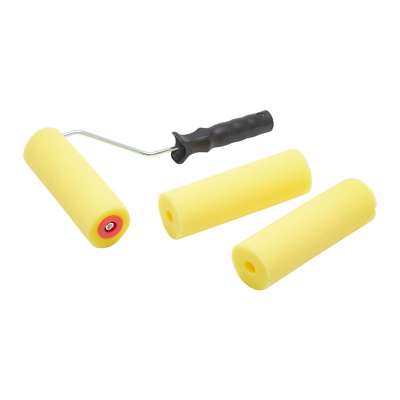
No bristles, so no brush marks — the reason foam wins on panel doors and metal where every stroke would otherwise show. Low texture foam takes water-based or solvent gloss, satin, undercoat and primer alike. Three sleeves and a frame, so you can run two colours or just swap when one wears out. Load it lightly though: foam holds far more paint than fabric and will run if you overdo it.
In stock
The Fit For The Job Gloss Roller lays gloss and satin down flat with no brush marks. Foam has no bristles to drag through the wet paint, so a panel door or a metal sheet comes out smooth rather than showing every stroke.
It is also quicker than a brush on flat areas. The set comes with three sleeves and a frame, so you can run gloss, satin, and undercoat on the same job without washing out between coats, or simply swap a sleeve when one gives up.
Foam holds more paint than a fabric sleeve, which catches people out. Load it heavily and you get runs down a door and a ridge at the bottom edge. Load it lightly, accept that you will reload more often, and the finish will be far better for it.
Use foam on the flat and a brush on everything else. A roller cannot reach into panel mouldings, glazing bars, or the edge where a door meets its frame. Most panel doors are a brush for the detail then a foam roller for the flat sections, which is quicker than doing the whole thing by brush.
Rinse in warm water for water-based paint, or use the right solvent for oil-based. Squeeze the foam gently rather than wringing it, as twisting tears it. Bear in mind that solvents break foam down over time, so a sleeve used for traditional gloss will not last as many jobs as one used for water-based satin. That is partly why three come in the set.
Supplied as a 7″ set with three sleeves and a frame. Fit For The Job also make foam mini roller sleeves for smaller areas.
Application Method: Roller

£5.00 inc VAT£4.17 ex VAT
